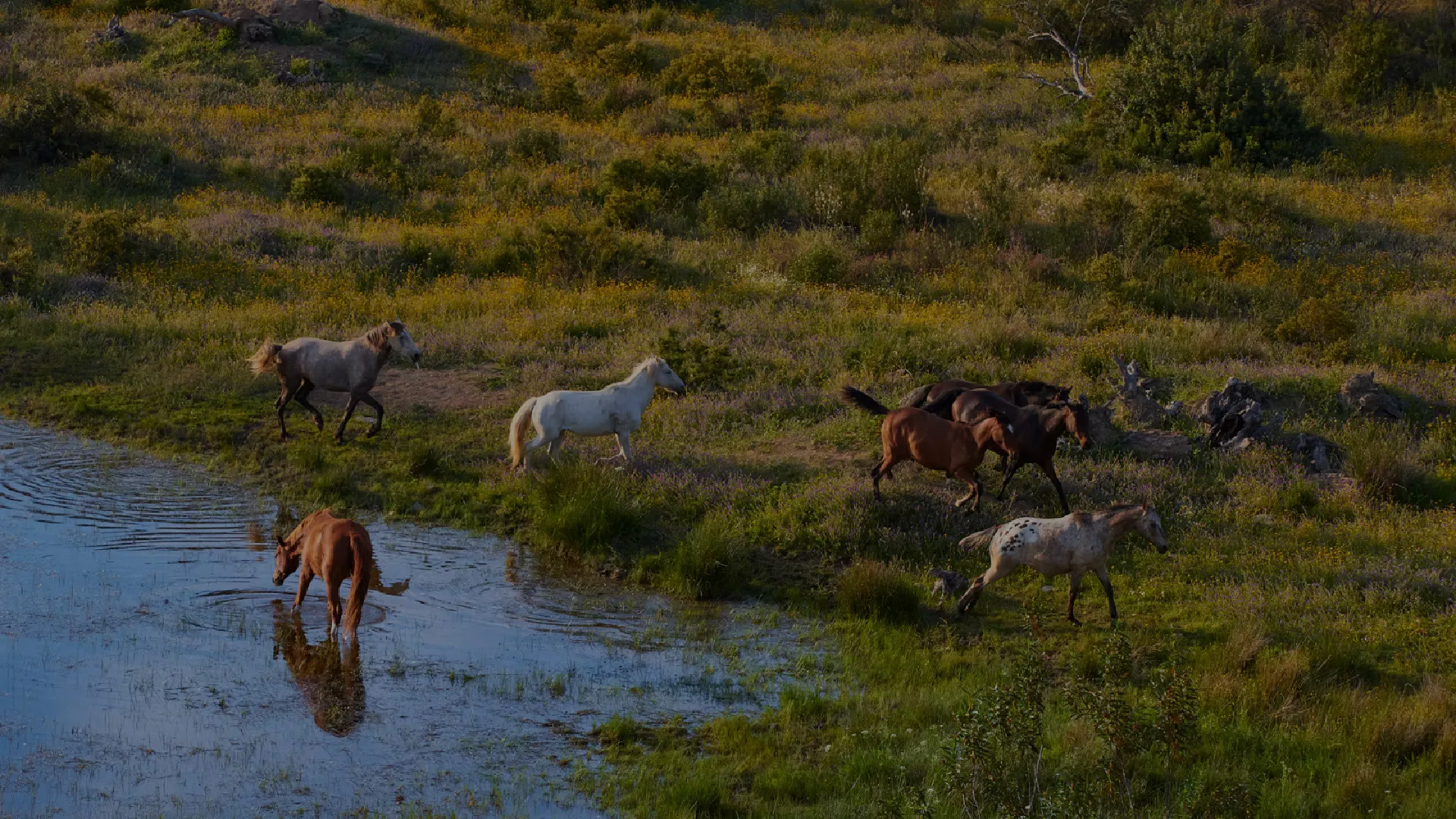
Horse Retirement in Freedom in Spain
A professionally managed extensive model focused on herd integration, space and long-term equine wellbeing.
Retirement as a balanced transition
Horse retirement in freedom is not the end of a working life, but a
structured transition into long-term balance. Once performance goals
are no longer central, sustained health becomes the priority.
Traditional stable-based systems focus on efficiency; retirement
requires a different framework.
A well-designed horse retirement in Spain combines open space with professional
oversight. Older horses benefit from continuous low-impact movement, social
interaction and reduced environmental stress. Equine welfare at this stage
depends on proportion: neither permanent confinement nor unmanaged pasture.
The aim is to provide a natural, extensive horse retirement where stability
replaces pressure.
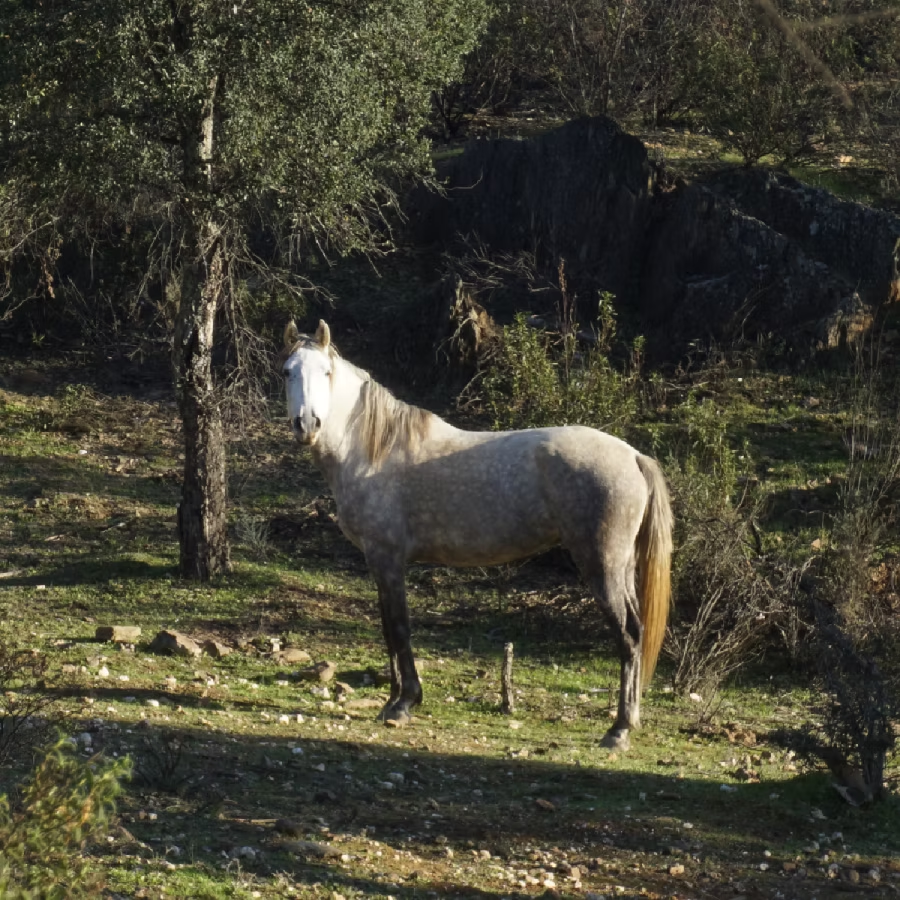
The herd living model
Horses are inherently social animals. The herd living model
reflects their biological structure. Clear hierarchy and daily
interaction contribute to emotional stability and behavioural
balance. In a residence for older horses, group integration must
be carefully managed according to temperament and compatibility.
Authentic socialisation reduces anxiety-driven behaviours and supports
confidence. Compared to isolation, extensive horse retirement allows
meaningful and sustained interaction. For senior horses or retired athletes,
herd life provides continuity and a calmer rhythm aligned with their
nature.
The limits of confinement
Permanent stabling has long been standard practice in competitive
environments. However, restricted movement can worsen degenerative
conditions such as osteoarthritis and limit overall vitality.
Confinement may also encourage stereotypic behaviours or lethargy
linked to stress.
While stabling remains valuable in specific contexts, it is not an optimal
long-term retirement model. Horse retirement in freedom encourages consistent
movement, environmental exposure and social contact. This extensive
management approach directly influences physical soundness and psychological
stability in ageing horses.
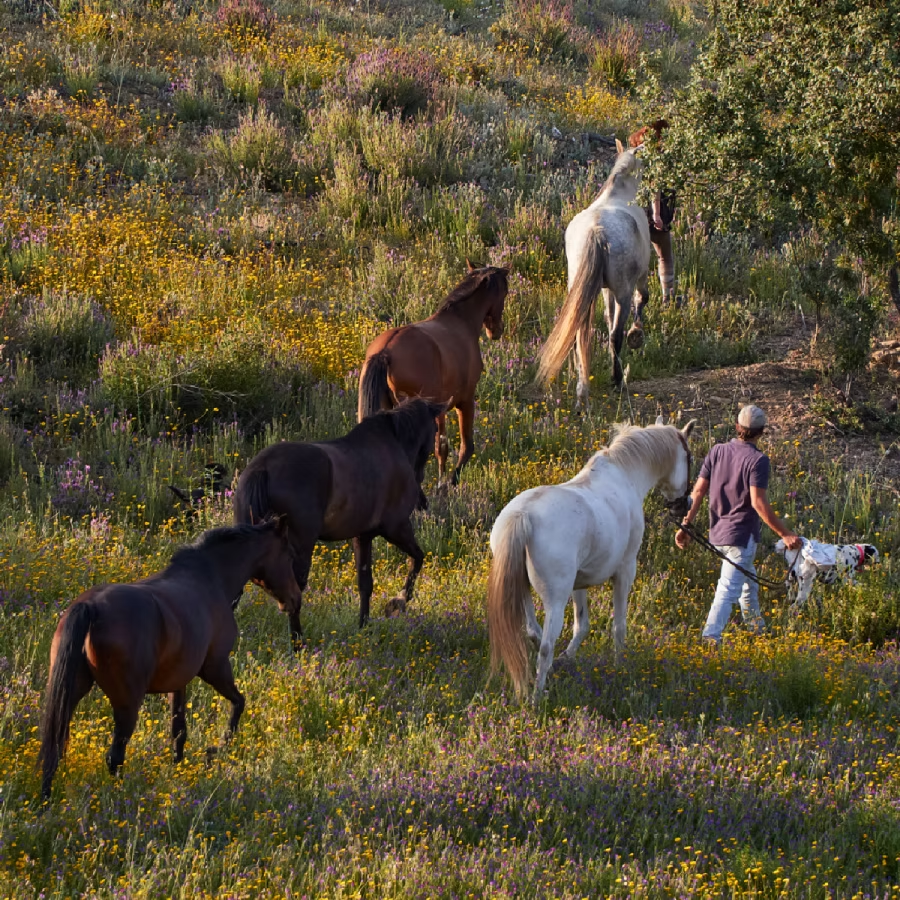
Infinite space for movement
Structured extensive management
Extensive management does not mean absence of control. A
professional horse retirement in Spain requires individual
assessment and consistent supervision. Age, previous workload,
medical history and body condition determine group placement and
care protocols.
The balance between autonomy and oversight is essential. Open environments
promote voluntary movement, while trained monitoring allows early detection
of subtle changes. This distinction separates structured retirement
facilities from unmanaged pasture. Equine welfare depends on informed
decisions, not assumptions.
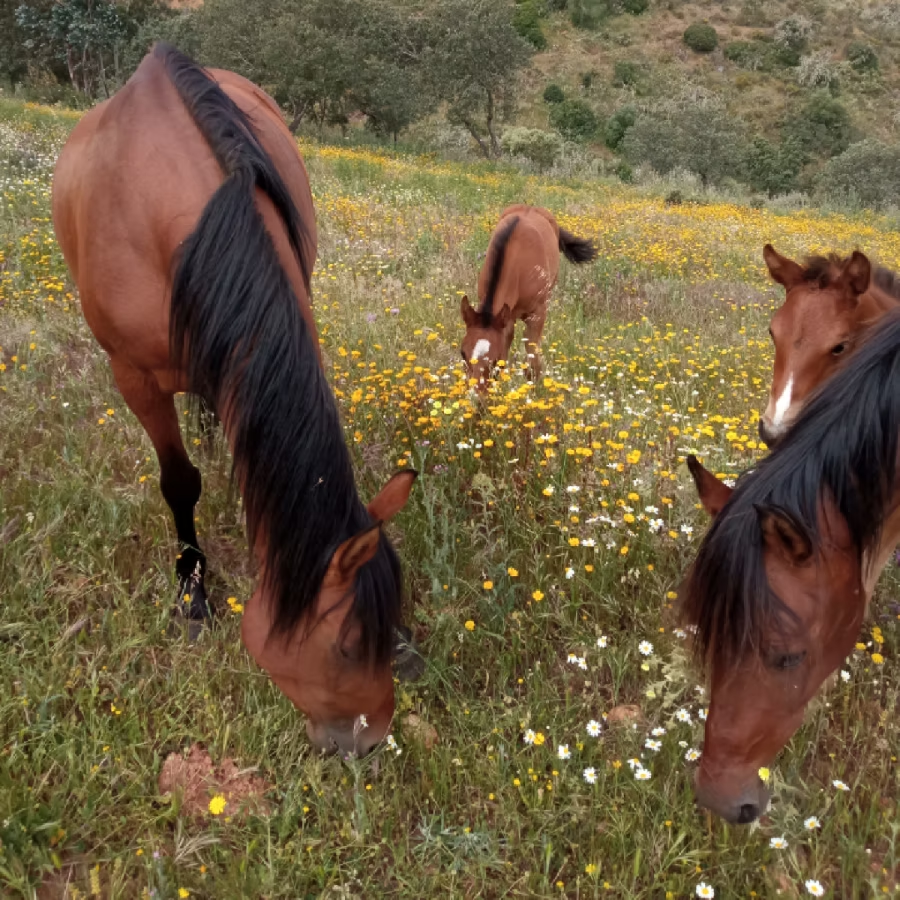
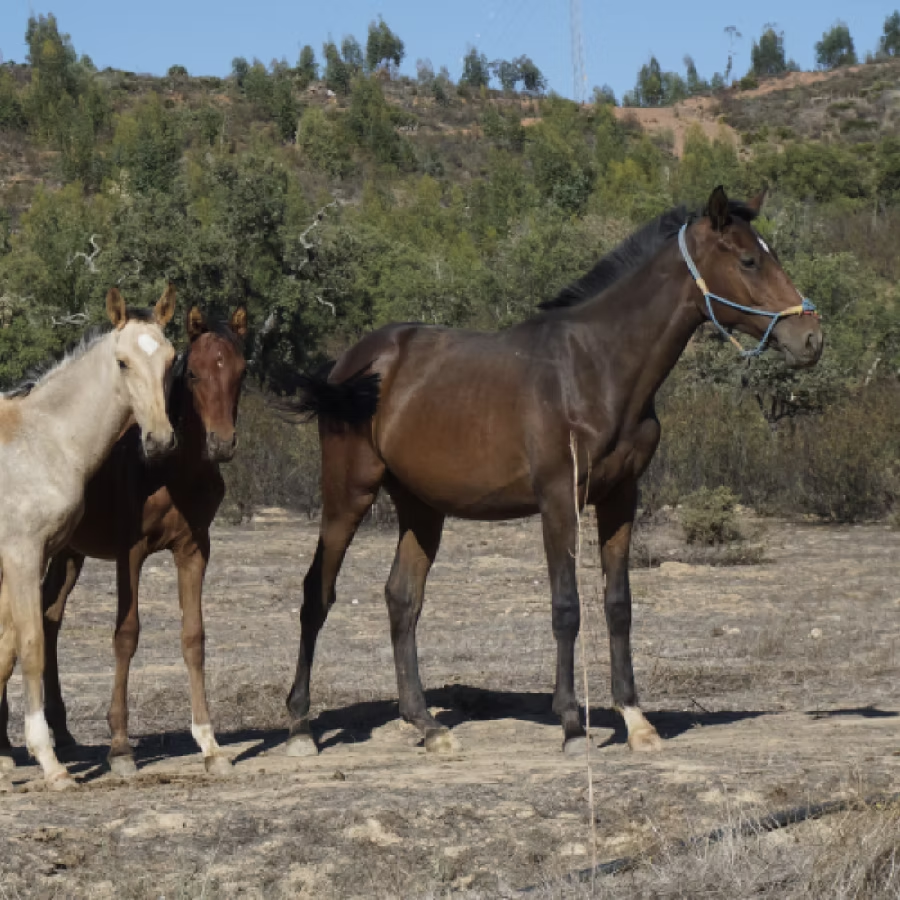
600 hectares in Andalusia
Scale is operational. Six hundred hectares in Andalusia,
specifically in the province of Huelva, provide the space required
for genuine extensive horse retirement. The climate allows outdoor
living throughout most of the year, reducing reliance on stabling.
Large territories enable pasture rotation, balanced herd distribution
and continuous locomotion. Horses can regulate activity naturally without
overcrowding. In horse retirement in freedom, environment and welfare
are inseparable; sufficient space ensures the model functions sustainably.
For responsible owners
This retirement model is designed for owners who see the later stages
of a horse’s life as a long-term responsibility. Senior horses,
retired sport horses and individuals requiring extended rest benefit
from a structured yet natural setting.
Horse retirement in Spain under extensive management suits those who prioritise
equine welfare over ongoing performance. Herd living, professional supervision
and real territorial scale offer continuity of care. Retirement becomes
a deliberate evolution in management, grounded in stability and respect
rather than sentimentality.
Let’s discuss your horse’s future
Invitation to start the initial technical assessment process.